Overview
Gallery
Information
Reviews

Location
Overview
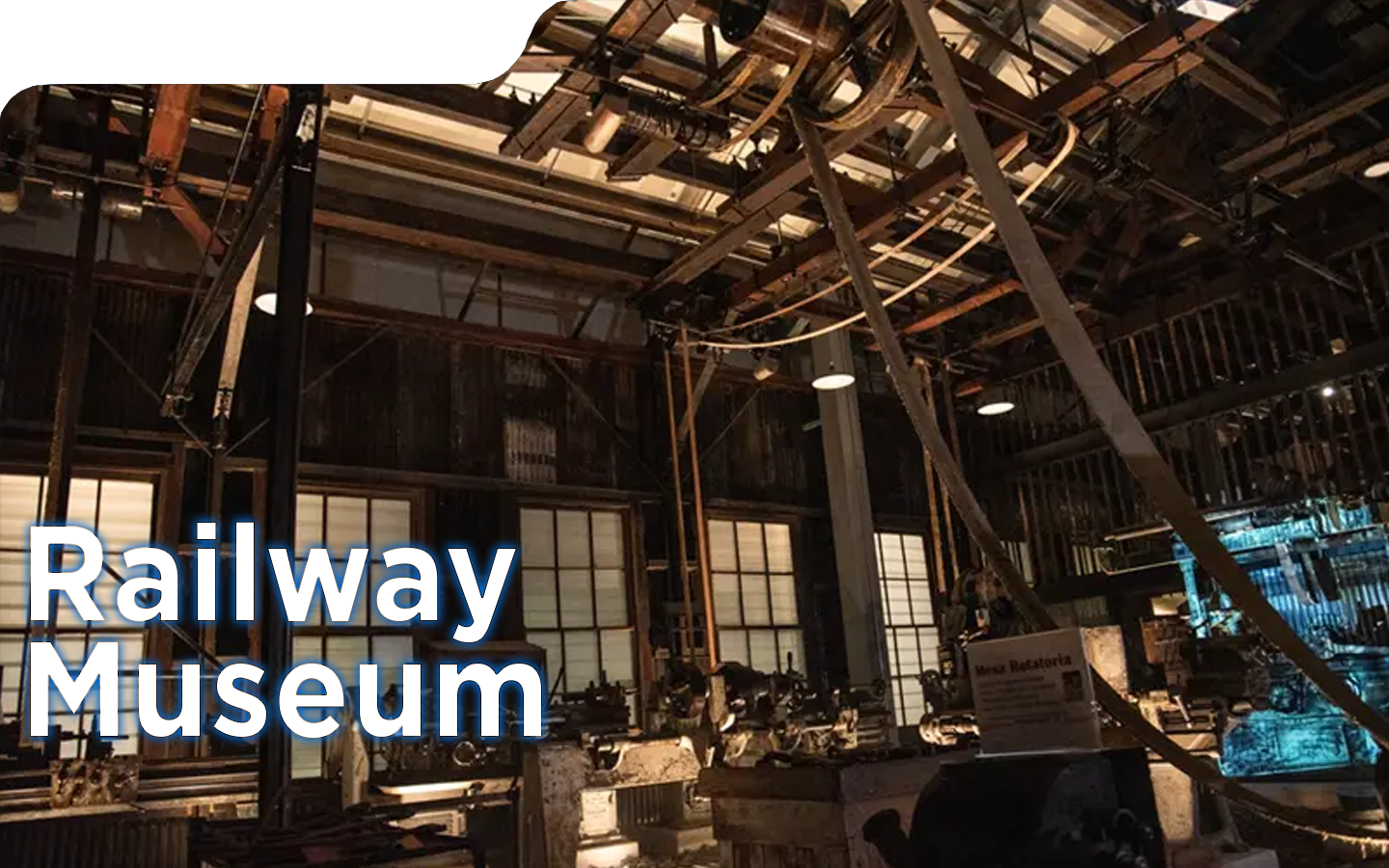
The Railway Museum is one of the most important historical and cultural sites in the city of Aguascalientes. Located in a traditional area linked to the state’s railway development, the museum stands out for preserving the memory and legacy of the railway—an industry that drove the region’s economic and industrial growth for many years.
Inside, visitors can view vintage locomotives, railcars, tools, and photographs that showcase the railway history of Mexico—and Aguascalientes in particular. The exhibits offer insight into the importance of the train in the city’s daily life, commerce, and urban development. Additionally, the museum provides an educational environment ideal for families, students, and tourists.
The Railway Museum is also a major tourist and cultural attraction that preserves part of the historical identity of Aguascalientes. Its heritage value and exhibitions make it a highly recommended visit for those wishing to learn about the railway tradition and industrial evolution of this region of Mexico.
Gallery
History
The history of the Railway Museum dates back to the railway boom in Mexico during the late 19th and early 20th centuries, when Aguascalientes established itself as a strategic point in the country’s railway network. Major railway workshops and yards were established in the city, driving its economic and industrial development.
Over time, the old railway facilities—particularly those in the Las Tres Centurias area—began to lose their original function due to the modernization of transportation. Rather than disappearing, these spaces were reclaimed as part of a historical and cultural preservation project aimed at safeguarding the region’s railway heritage.
Finally, the Railway Museum was established to preserve locomotives, railcars, tools, and historical documents. Today, it is part of a cultural complex that commemorates the importance of the railway in the growth of Aguascalientes and has become a key tourist and educational landmark.
Schedule
The Railway Museum is generally open from Wednesday to Sunday, 11:00 a.m. to 6:00 p.m., within the Plaza de las Tres Centurias complex.
Leave a Reply